Somewhere in East Africa right now, a column of wildebeest is moving.
Not wandering – moving with purpose, driven by instinct, following the rains across a landscape they have crossed for hundreds of thousands of years. Approximately 1.5 million of them. Plus 200,000 zebra. Plus 350,000 gazelle. The largest overland animal movement on Earth, playing out across a 30,000-square-kilometre ecosystem that straddles the Kenya-Tanzania border.
The Masai Mara is the Kenya chapter of that story: the chapter where the animals arrive at a river, the crocodiles are waiting, and nature produces the most dramatic scenes in wildlife on what can be a near-daily basis.
What Is the Great Migration?
The Great Migration is a year-round, circular journey made by approximately 1.5 million wildebeest, 200,000 zebra, and 350,000 Thomson’s and Grant’s gazelle across the Serengeti-Mara ecosystem in Tanzania and Kenya.
It is not a single event. It is not a parade that starts on a fixed date. It is a continuous, cyclical movement driven by one thing: grass. Specifically, the fresh, nutritious grass that follows rainfall across the plains. The wildebeest follow the rains, and the rains follow a broadly predictable seasonal pattern.
Why Do Wildebeest Migrate?
The answer is survival. The southern Serengeti – where the migration cycle begins – cannot sustain 1.5 million large grazers year-round. The grass gets eaten. The animals move to find more. When the rains fall in the north, the northern Serengeti and Masai Mara produce the fresh, mineral-rich grass the wildebeest need. So they move north.
Then the southern rains return, the south regenerates, and the cycle pulls them back. It has been happening this way for hundreds of thousands of years.
How Many Wildebeest?
The commonly cited number is 1.5 million wildebeest, but the actual count fluctuates. Census estimates have ranged from 1.2 million to 1.7 million depending on the year, rainfall patterns, and predation rates.
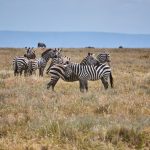
The wildebeest and zebra travel together because they complement each other ecologically. Zebra eat the long, coarse top of the grass. Wildebeest eat the shorter, more nutritious stems below. They are each other’s ecosystem engineers, making the grass more accessible as they move.
The Masai Mara: Kenya’s Stage for the Migration
The Masai Mara National Reserve covers approximately 1,510 square kilometres in southwestern Kenya. The broader Mara ecosystem, including surrounding community conservancies, covers more than 2,500 square kilometres of connected wildlife habitat.
The Mara is the northern terminus of the annual migration. When the wildebeest arrive here – typically from late June onward – they find:
- The Mara River, running west to east directly across their path
- Resident predator populations that have been waiting for them: lions, cheetah, leopard, hyena, wild dog
- The Maasai community lands that create a buffer of protected habitat around the national reserve
The migration experience in the Masai Mara is concentrated, dramatic, and logistically accessible. Nairobi is 45 minutes by air. Quality camps in the conservancies put you within 20 minutes of multiple crossing points. The density of wildlife during the July-October peak is difficult to overstate.
The Mara River Crossing: The Migration’s Most Famous Moment
The Mara River crossing is the image that defines the Great Migration in the global imagination. It is also more intense in person than any screen version prepares you for.
Why Do Wildebeest Cross the Mara River?
The river lies between the wildebeest and the fresh grass they need. There is no alternative route. The Mara River runs roughly west to east, cutting directly across the migration path. The wildebeest must cross it – and later, return south as the season changes. They cross the same river twice, each crossing as unpredictable as the last.
What Happens at a River Crossing?
The approach: Wildebeest stack on the southern bank in their thousands. They pace. They approach the edge and retreat. The tension before a crossing can build over minutes or hours – animals pressing from behind, leaders approaching and pulling back. This phase can last from 20 minutes to three hours.
The moment: One animal tips over the edge. The entire column follows within seconds. There is no individual decision visible in that moment – it is a wave of collective motion.
The crossing: Nile crocodiles – some over four metres long – are waiting in the deeper sections of the river. They have been there for weeks. They take a percentage. The wildebeest keep coming regardless.
The scramble: The far bank is steep and slippery, churned to wet mud within minutes of a crossing starting. Animals fall back. Some are trampled. The ones who make it shake off the water and begin grazing almost immediately. The crossing is over in 20 to 45 minutes.
What remains: A quietened river, a few carcasses drifting downstream, vultures beginning to circle. And upstream, another column is already approaching the bank.
The Full Annual Migration Cycle
Understanding the Great Migration requires seeing the complete picture, not just the Kenya chapter.
| Month | Location | Key Events |
|---|---|---|
| January to March | Southern Serengeti, Tanzania | Calving season: approximately 500,000 calves born in six weeks |
| April to May | Central Serengeti | Northward movement, long rains |
| June | Northern Serengeti / Kenya border | First herds crossing into Kenya |
| July to October | Masai Mara, Kenya | Mara River crossings: peak migration |
| November to December | Moving south | Return to Tanzania as short rains begin |
The calving season in January-March is spectacular in its own right: predator action around vulnerable calves is intense, and the southern Serengeti in this period is extraordinary. But the Kenya window – July to October – draws the majority of migration-focused visitors because of the river crossings and the sheer concentration of the herds.
The Animals in the Migration
The migration is dominated by wildebeest, but the herd is a mixed community.
Blue Wildebeest (Connochaetes taurinus)
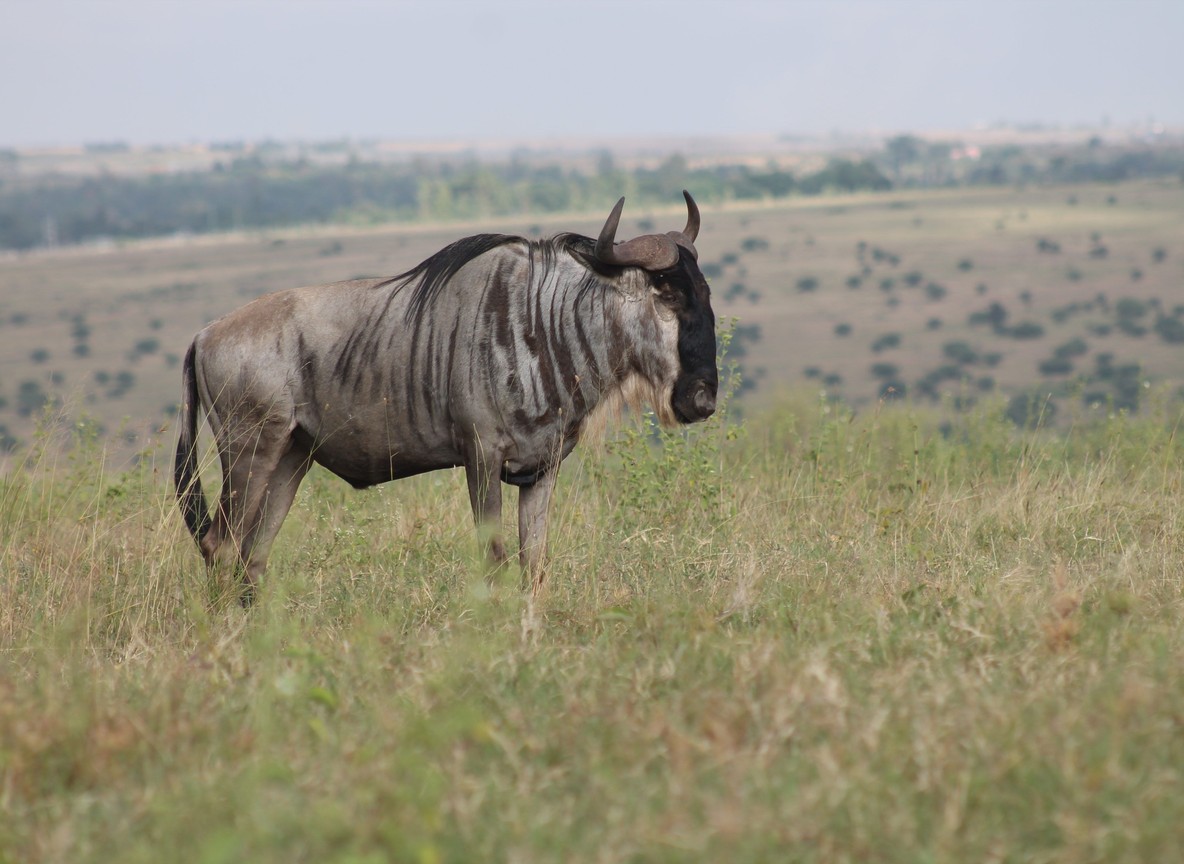
Blue wildebeest – also called gnu – are large antelopes weighing 180-270kg. Their front-heavy build and ungainly gait make the grace and determination of the river crossing all the more remarkable. Animals that survive a Mara River crossing typically show no lasting effects and rejoin the herd within hours.
Plains Zebra (Equus quagga)
Zebra travel alongside wildebeest throughout the migration. Their social structure is different – they move in family groups that remain intact even within the enormous herd. Zebra are alert and good early-warning systems for predators. Their distinctive barking call is one of the defining sounds of the migration.
Thomson’s Gazelle and Grant’s Gazelle
Gazelle follow the migration at the edges, benefiting from fresh grass exposed by the passage of the larger grazers. They are the preferred prey of cheetah – and migration season in the Mara produces some of the best cheetah hunting behaviour on the continent.
The Predators
No account of the Great Migration is complete without the predators. Lion prides in the Mara are larger and better fed during migration season than at any other time of year. Hyena clans expand their range to follow the herds. Cheetah capitalise on the gazelle that fringe the herd. Wild dog occasionally appear in the northern Mara during the migration period. Leopard are present year-round but more solitary.
Conservation and the Migration
The Great Migration would not exist without the Maasai communities whose land surrounds and connects to the national reserve. More than 500,000 acres of Maasai community conservancies – Mara North, Olare Motorogi, Ol Kinyei, Naboisho, and others – provide the buffer habitat that allows wildlife to move freely between the reserve and the broader ecosystem.
These conservancies operate through agreements between Maasai landowners and conservation operators. Families receive direct income from wildlife tourism in exchange for keeping their land free from agriculture. The model is working: conservancy areas consistently have higher wildlife densities than the national reserve because visitor numbers are strictly controlled, and the Maasai land acts as a critical migration corridor that no fence or development blocks.
Planning Your Migration Visit
Best Months
- July: Herds arriving, first crossings of the season, slightly lower crowd levels than August
- August: Peak crossing frequency, maximum herd density, highest visitor numbers
- September: Crossings continue, crowds begin to ease, and herds start spreading west toward the Mara Triangle, opening up crossing points away from the most congested viewing areas
- October: Herds still present, further crowd reduction, herds beginning to move south
Booking Lead Time
Peak migration camps at quality properties fill 9-12 months in advance. If you are planning an August trip, starting the conversation a year ahead is not excessive.
Camp Location
Positioning matters enormously for migration access. Camps along the Mara River corridor or within the Mara Triangle give the fastest access to crossing points. The difference between a 10-minute and a 60-minute transfer to the river adds up across a 4-day stay.
Frequently Asked Questions
Is the Great Migration only in Kenya?
No. The migration is a year-round cycle across both Kenya and Tanzania. The Masai Mara is where the Mara River crossings happen (July-October), which is the most dramatic and most-visited phase. Tanzania’s Serengeti hosts the calving season (January-March) and the long northward build-up.
Can the crossings be guaranteed?
No. Even the most experienced Mara guides cannot guarantee a crossing on any given day. Wildebeest crossing timing is influenced by predator presence, water levels, herd density, and instinct. What good positioning and an experienced guide provides is the best probability of being in the right place when a crossing happens.
Is the Great Migration the largest animal migration on Earth?
By land animal numbers, yes. Approximately 1.5 million wildebeest plus companion species make this the largest documented overland animal migration. Some bird and marine migrations involve larger numbers, but no land migration matches the wildebeest migration in scale.
Can you see the migration from the air?
Yes. Hot air balloon safaris over the Masai Mara during migration season offer aerial views of the herds that are genuinely extraordinary. The scale that is hard to perceive from a vehicle becomes staggering from altitude.
What to Read Next
If you are choosing between the peak migration months, the comparison of July vs August in the Masai Mara breaks down what changes between the two months in practical detail. If you are deciding whether migration season is necessary for your trip at all, the migration vs non-migration season guide gives a clear-eyed view of what each period actually delivers.
Every trip described here can be tailored: dates, budget, camps, and pace built around you.
Get a Personalised SafariFurther reading
More safari planning resources
- Wildebeest migration route map from Valley Safaris
- Great Migration safari collection on FindMySafari
- Best time to visit Kenya month-by-month map from Valley Safaris
- Interactive Maasai Mara map from Valley Safaris
Related guides: The Great Migration in Masai Mara: A Complete Planning Guide.